 <
<

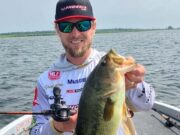










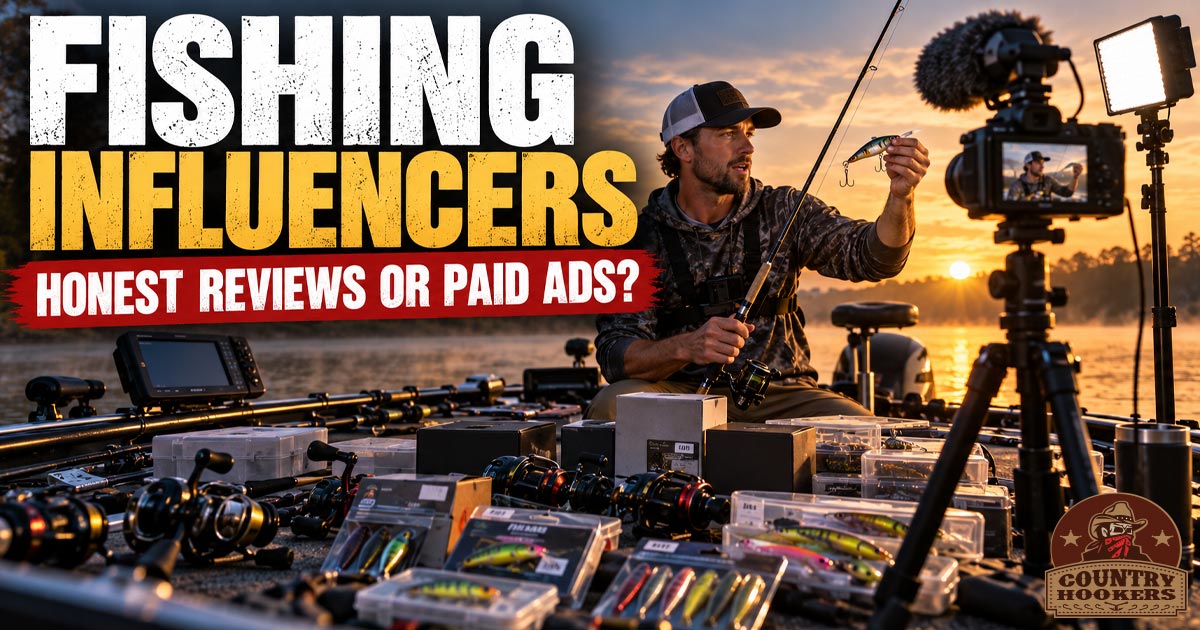
YouTube used to be a pretty simple place to learn how to catch fish. Some guy with a camera would show you what he was throwing, where he was fishing, and maybe explain why the bass were hitting one lure instead of another.
Now you can watch a 20-minute fishing video and come away wondering whether you just learned something useful or sat through a commercial.
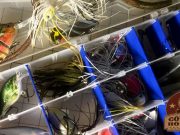
The rod is linked in the description. So is the reel, the line, the tackle bag, the sunglasses, the fish finder, and the $40 pack of specialty lures. There’s a discount code, a giveaway, and a reminder to use the creator’s link before ordering.
And somehow, every piece of equipment is amazing.
That doesn’t mean the guy can’t fish. It doesn’t even mean he’s lying. But it does raise a question that doesn’t get asked nearly enough in the fishing world.
How much of the fishing gear advice we’re getting online is actually independent, and how much is advertising dressed up as a fishing trip?
The answer matters because the fishing industry has built a substantial marketing business around the people anglers trust to tell them what works.
When Fishing Advice Became a Business
Fishing companies have sponsored professional anglers for decades. Tournament jerseys covered in logos aren’t exactly a new development.
The difference is that sponsorship used to be relatively obvious.
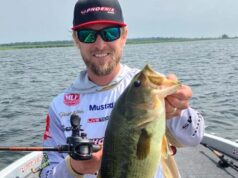
If you watched a professional bass fisherman wearing a Shimano hat and standing in a boat wrapped with sponsor logos, you understood there was a business relationship involved. He might genuinely love the products, but nobody was pretending the endorsement was entirely independent.
Social media changed how those relationships look.
Today, a fishing creator might film a weekend on the lake, catch a few bass, explain a particular lure presentation, and casually mention that he’s been using a new rod.
The video looks like ordinary fishing content. The product recommendation feels like advice from a friend.
But behind the scenes, the creator could have received free equipment, a flat sponsorship payment, affiliate commissions, or a contractual obligation to feature a product.
None of those arrangements automatically makes the advice dishonest. Some sponsored products really are excellent, and some creators refuse deals with companies they don’t trust.
The problem begins when viewers can’t tell where the fishing advice ends and the marketing begins.
The Five Ways Fishing Influencers Make Money From Gear Recommendations
Not every fishing creator gets paid the same way. Some have straightforward sponsorship contracts. Others earn money whenever somebody clicks a link and buys something. And some receive thousands of dollars’ worth of equipment without ever getting a paycheck from the manufacturer.
Understanding these arrangements makes it easier to judge what you’re watching.
1. Direct Sponsorships
This is the traditional arrangement. A fishing company pays a creator to feature its products in videos, social media posts, or other content.
The agreement might cover one video, several posts, or an ongoing relationship.
A sponsored creator may be required to show a particular rod, mention certain product features, or include a link to the manufacturer’s website.
The problem isn’t necessarily the sponsorship itself. It’s whether the viewer understands that the content was produced as part of a commercial arrangement.
2. Affiliate Links
Affiliate marketing is less obvious.
A creator recommends a fishing reel, links to a retailer, and receives a commission when viewers make qualifying purchases.
That commission gives the creator a financial interest in whether the audience buys the product.
It doesn’t automatically make the review dishonest. But it creates a potential conflict of interest, particularly when a creator is comparing competing products.
Imagine two spinning reels that perform almost identically. One offers a commission to the reviewer, and the other doesn’t.
Would that affect which reel gets recommended?
It shouldn’t. But without knowing the financial relationship, viewers have no way to evaluate that potential incentive.
3. Free Fishing Gear
This is probably one of the most misunderstood parts of influencer marketing.
A company doesn’t necessarily have to hand someone cash to create a commercial relationship.
Free rods, reels, electronics, tackle, and other equipment can all have real monetary value.
The Federal Trade Commission specifically identifies free or discounted products as potential material connections that require disclosure when someone endorses a product.
Even if a company doesn’t tell the creator what to say, receiving free equipment can create an incentive to maintain a good relationship with the manufacturer.
And there’s another problem: someone who received a $500 rod for free may judge its value differently from an angler who had to spend $500 of his own money.
Source: FTC: Disclosures 101 for Social Media Influencers.
4. Discount Codes and Brand Ambassador Programs
You’ve probably seen the pitch.
Use my code at checkout and save 15%.
Sometimes the creator receives a commission from those purchases. Other arrangements may involve discounts, store credit, free products, or other benefits.
A personalized discount code can signal that the creator has a relationship with the company, but it doesn’t necessarily tell viewers whether the creator earns money from the sale.
The FTC has specifically addressed this issue, warning that a personalized code may not adequately communicate the financial nature of a relationship.
5. Selling Their Own Products
Some fishing personalities have gone beyond promoting other companies’ gear and now sell their own lures, rods, tackle, apparel, or other products.
There’s nothing inherently wrong with that. Plenty of anglers have turned their experience into legitimate businesses.
But it changes how their recommendations should be evaluated.
A creator who owns a lure company isn’t an independent reviewer when he tells viewers his own lure is the best thing on the market.
He’s a manufacturer promoting his product.
That’s advertising, even if it’s wrapped around an entertaining fishing video.
The FTC Actually Has Rules About This Stuff
Fishing influencers aren’t exempt from federal advertising laws simply because their content is filmed outdoors.
The Federal Trade Commission regulates deceptive endorsements and undisclosed material connections between advertisers and people recommending their products.
In 2023, the FTC updated its Endorsement Guides to address modern advertising practices, including social media influencers, online reviews, and promotional relationships.
The agency made clear that endorsements must reflect honest opinions and that relationships capable of affecting the credibility of a recommendation should be disclosed when they aren’t otherwise apparent.
Importantly, the FTC also warned that simply using a platform’s built-in disclosure feature might not be enough.
For a fishing creator, that means several things.
If a company pays for a video about a new fish finder, the commercial relationship should be made clear.
If a manufacturer sends someone a free rod with the expectation that they’ll review or promote it, that connection generally needs to be disclosed.
If a creator earns affiliate commissions from recommended tackle, viewers should be told about that financial relationship.
And saying a product is fantastic when the creator actually thinks it’s terrible can raise separate truth-in-advertising issues.
The FTC’s guidance specifically says influencers can’t claim personal experience with products they haven’t used.
Burying the Disclosure Doesn’t Necessarily Make It Legal
Here’s something worth paying attention to the next time you watch a fishing gear review.
A creator might spend 15 minutes praising a new baitcasting reel, but the only mention of a commercial relationship is buried in the video description beneath a dozen product links.
According to FTC guidance, disclosures should be difficult to miss and presented with the endorsement itself.
For videos, the FTC recommends disclosures within the actual video rather than relying exclusively on the description.
And for affiliate relationships, the agency says creators should disclose the relationship in the video and near the affiliate links in the description.
YouTube has its own rules, too.
Creators must notify YouTube when their videos include paid product placements, sponsorships, or endorsements covered by its paid-promotion policies. YouTube can then display a paid-promotion notice to viewers.
But YouTube also makes clear that creators and advertisers remain responsible for complying with applicable disclosure laws.
In other words, checking a box on YouTube doesn’t automatically settle every legal disclosure obligation.
The Expensive Gear Problem: Does a $400 Reel Actually Catch More Fish?
This is where the financial incentives behind fishing content become especially relevant.
A manufacturer releases a new premium baitcasting reel. It’s lighter than the previous model, has upgraded bearings, a refined braking system, and a price tag that makes you question your life choices.
Within weeks, fishing channels are reviewing it.
The reel is described as smoother, more sensitive, easier to cast, and worth the upgrade.
Maybe some of those claims are true. Better equipment can offer legitimate advantages, including improved durability, reduced weight, and more consistent performance.
But whether those improvements translate into more fish is a different question.
A premium reel might make fishing more comfortable. It might improve casting control or hold up better under heavy use. None of that automatically means an average weekend angler will catch more bass than someone using a reliable midpriced setup.
The problem with many gear reviews is that they focus heavily on features while providing little evidence of meaningful on-the-water improvement.
A reviewer can tell you a reel feels smooth. That’s a legitimate personal observation.
But saying it will help you catch more fish is a much bigger claim.
For that, you’d want something more substantial than footage of a bass being landed during a sponsored fishing trip.
A Fishing Video Isn’t a Controlled Gear Test
Suppose a creator uploads a video titled something like This New Lure Is Absolutely Destroying Bass!
You watch him catch a dozen fish in one afternoon.
That’s impressive. But what does it actually prove about the lure?
Not nearly as much as the title suggests.
Maybe the fish were actively feeding. Maybe the angler found a productive school. Maybe several other lures would have worked just as well.
And because the creator controls the editing, you probably don’t know how many casts were made, how many fish were missed, or how many hours of unsuccessful fishing were left out.
That’s not an accusation that fishing creators are faking catches. It’s simply a limitation of using edited entertainment as evidence of product performance.
A proper comparison would account for factors such as fishing conditions, location, angler experience, lure presentation, and the amount of time spent using competing products.
Most fishing videos aren’t designed to do that.
They’re designed to entertain, demonstrate techniques, and keep people watching.
And that’s fine, as long as viewers understand the difference.
The Fish Finder Arms Race
Electronics are another category where advertising and useful advice can become difficult to separate.
Modern fishing boats can carry sophisticated sonar systems, GPS mapping equipment, trolling motors, and live-imaging technology.
These products can provide real benefits. Live sonar, for example, allows anglers to observe fish and underwater structure in ways traditional sonar doesn’t.
But a review of a $3,000 electronics setup should answer more than whether the screen looks impressive.
How difficult is it to install? How well does it perform in shallow water? How much battery power does it consume? What happens when the sun hits the screen? How useful is it for someone fishing from a small aluminum boat rather than a tournament bass boat?
And perhaps the most important question: Is the improvement worth the money for the kind of fishing most people actually do?
A professional tournament angler and somebody fishing twice a month from a kayak have very different needs.
The best equipment for one may be an expensive waste of money for the other.
That’s why gear advice should be judged against the needs of the person buying it, not just the experience of the person promoting it.
Why You Rarely Hear About the Gear That Sucks
One of the biggest weaknesses of the influencer business model is that negative reviews can create commercial problems.
A creator who depends on free products and sponsorships may have an incentive to avoid upsetting the companies supplying that equipment.
That doesn’t mean every sponsored reviewer is dishonest. But the financial pressure is easy to understand.
If you criticize a manufacturer’s new reel, that company might be less interested in working with you again.
If you consistently praise everything they send, the relationship may be easier to maintain.
The result can be a steady stream of positive reviews, even without anyone explicitly instructing a creator to lie.
Sometimes the bias is less obvious.
A reviewer might simply decline to publish a review of a bad product. Or spend five minutes praising a reel’s features while briefly mentioning its weaknesses.
Neither behavior, by itself, proves a violation of advertising law.
But it creates a problem for viewers who are trying to compare products fairly.
A reviewer who never finds anything wrong with the equipment he recommends isn’t necessarily giving you the whole picture.
What Makes a Fishing Gear Review Worth Trusting?
You don’t have to swear off YouTube fishing channels or refuse to buy anything recommended by a sponsored angler.
Some of the most knowledgeable fishermen in the country have commercial relationships with tackle manufacturers. Their experience doesn’t disappear because they’re getting paid.
But there are some things worth looking for before spending your money.
- Clear disclosure. Does the reviewer tell you whether the product was purchased, provided for free, or featured as part of a sponsorship?
- Actual fishing experience. Has the reviewer used the equipment for months, or is this a first impression after one afternoon?
- Real criticism. Does the review identify weaknesses, limitations, or situations where the product isn’t worth buying?
- Useful comparisons. Is the equipment compared with similarly priced alternatives, including competing brands?
- Specific performance information. Does the reviewer explain what the equipment actually does better, rather than relying on vague claims about quality?
- Long-term reliability. Is there any discussion of wear, maintenance, failures, replacement parts, or warranty service?
- A reason to upgrade. Does the review explain who genuinely benefits from the product and who would be better off keeping their existing gear?
You can also compare the recommendation with feedback from anglers who bought the product themselves.
Fishing forums, local tackle shops, tournament anglers, and experienced fishermen who don’t have a financial relationship with the manufacturer can offer useful additional perspectives.
No single source is perfect. But relying on several independent sources reduces the chance that one person’s commercial interests determine what you buy.
Are Sponsored Fishing Gear Reviews Fake?
Not necessarily.
A sponsored fishing gear review can be accurate, informative, and based on genuine experience.
The important distinction is between a commercial relationship and a dishonest endorsement.
The FTC doesn’t prohibit influencers from being paid to recommend products. It requires truthful endorsements and appropriate disclosure of material relationships.
The agency also recognizes that advertisers have responsibilities when using influencers to promote products.
That means the presence of a sponsorship isn’t proof that a review is worthless.
But the absence of a sponsorship disclosure doesn’t prove that a review is independent, either.
And a glowing recommendation deserves more scrutiny when the person making it benefits financially from the sale.
The Best Fishing Advice Might Be Coming From the Guy Who Isn’t Selling Anything
There’s something to be said for the old guy at the boat ramp who tells you what the bass are hitting without handing you a discount code.
He might be wrong. He might exaggerate the size of his last catch. He might even send you to the wrong cove because he doesn’t want you fishing his favorite spot.
But at least you know he isn’t earning a commission when you buy a particular crankbait.
That kind of advice has always been part of fishing.
People share what works, argue about brands, recommend favorite lures, and complain about equipment that failed them.
The internet made those conversations available to millions of people. It also gave companies a way to turn those conversations into advertising.
The trick is recognizing which one you’re watching.
Frequently Asked Questions About Sponsored Fishing Gear Reviews
Do fishing influencers get paid to recommend gear?
Some do. Fishing creators may receive direct sponsorship payments, affiliate commissions, free products, discounts, or other benefits from manufacturers and retailers. Other creators purchase and review equipment independently.
Are fishing influencers required to disclose free gear?
When free gear creates a material connection to an endorsement, FTC guidance generally calls for disclosure. The precise circumstances matter, including whether the product was provided in connection with promotion.
Are affiliate links considered advertising?
Affiliate links can create a financial relationship between a reviewer and a retailer or manufacturer. When that relationship is material to a product endorsement, it should be clearly disclosed.
Can a fishing influencer give a negative review of a sponsor’s product?
Yes. Advertising law doesn’t require positive reviews. In fact, endorsements must reflect the endorser’s honest opinions and experiences. Contractual terms may affect a creator’s commercial relationship, but they don’t authorize deceptive claims.
Does a YouTube paid-promotion label mean the entire video is sponsored?
Not necessarily. The label indicates that the creator has declared paid promotional content. The arrangement might involve a particular product placement, endorsement, or broader sponsorship.
Can you trust fishing gear reviews on YouTube?
Many reviews contain useful information, including firsthand demonstrations and product comparisons. The best approach is to check for commercial relationships, look for meaningful criticism, and compare several sources before making an expensive purchase.
The Bottom Line: Know When You’re Watching an Ad
There’s nothing wrong with a fishing creator making money.
Producing quality fishing content takes time, equipment, travel, editing, and plenty of days on the water when the fish refuse to cooperate.
And there’s nothing wrong with a tackle company paying a knowledgeable angler to demonstrate its products.
The problem is when advertising is presented in a way that makes it look like independent advice.
Fishing gear is expensive enough without buying something because a stranger on YouTube said it changed his life.
Before you spend hundreds of dollars on another rod, reel, or fish finder, ask yourself a simple question.
Would this guy still be recommending the same product if there wasn’t a paycheck, a free box of gear, or an affiliate commission involved?
You might not know the answer.
But it’s worth asking.